1978 Museums of India-Airavat,Kalpadruma,Gold Coin & Daggers n Knife-Block of 4 Stamps(27th July)(set of 4)
₹125.00
Only1 item(s)left in stock!
1 in stock

Guaranteed Checkout
-
Delivers in: 5-7 Working Days Shipping & Packaging
The “Museums of India” philatelic series issued by the Indian Posts and Telegraphs Department on 27 July 1978 was not a single stamp, but a highly celebrated set of 4 commemmorative stamp.
Each single stamp in the series highlighted a legendary, historically significant artifact from a prominent Indian museum. If you are looking to identify or describe a specific single stamp from this 1978 release, it will be one of the four distinct designs detailed below:
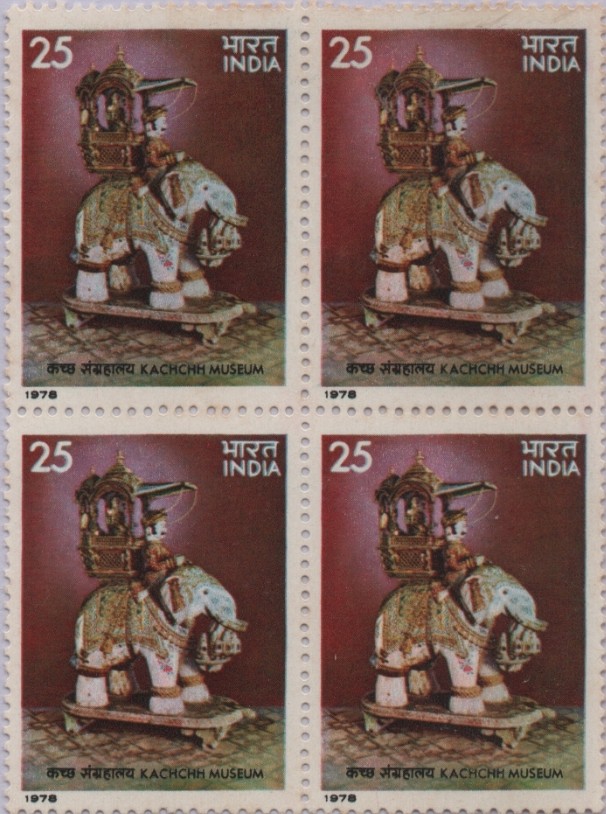
1. The 25 Paise Stamp: ‘Airavat‘ (Kachchh Museum, Bhuj)
-
- Description: This stamp features a wooden, multi-trunked white elephant known as ‘Airavat’ (early 19th century AD).
- Historical Significance: Originating from a Jain temple in the Gujarat region, this piece exemplifies exquisite traditional regional woodcarving. Airavat is celebrated across Hindu, Buddhist, and Jain traditions as the celestial mount of Indra. [1, 2]
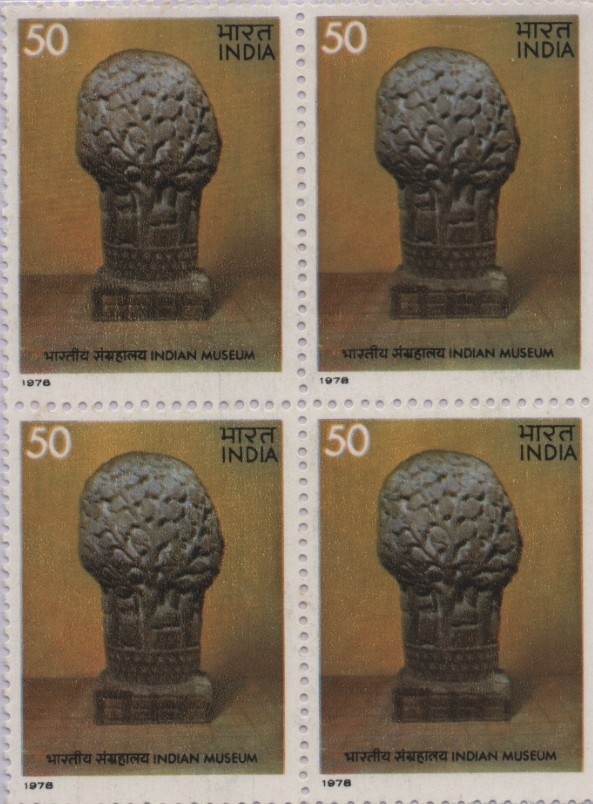
2. The 50 Paise Stamp: ‘Kalpadruma’ (Indian Museum, Kolkata)
-
- Description: This stamp illustrates the iconic ‘Kalpadruma’ capital, dating back to the 2nd Century BC.
- Historical Significance: Discovered by British archaeologist Sir Alexander Cunningham, this sandstone sculpture once served as the capital of a pillar at Besnagar in Madhya Pradesh. It depicts the mythological wish-fulfilling tree, heavily laden with traditional treasures (nidhis) like conch shells, lotuses, and vases overflowing with coins, likely belonging to a shrine dedicated to Kubera (the God of Wealth).
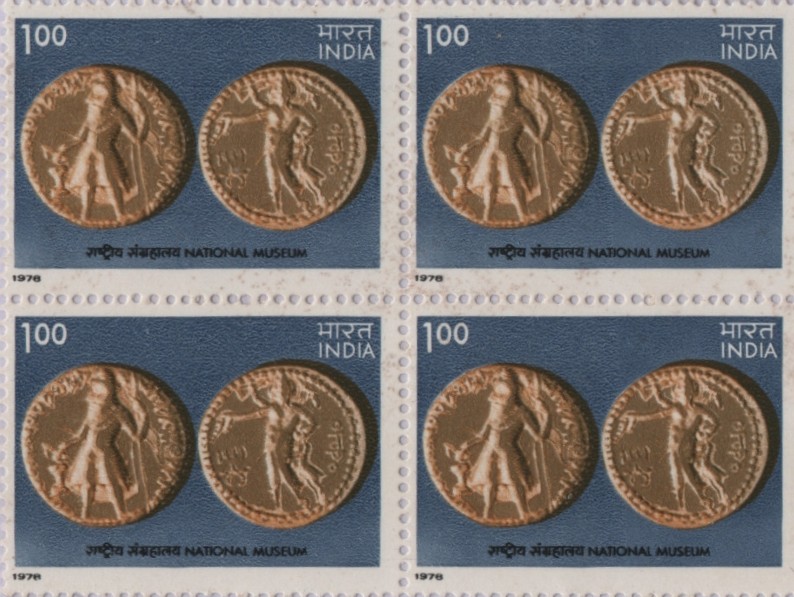
3. The 100 Paise (₹1) Stamp: Kushan Gold Coin (National Museum, New Delhi)
-
- Description: This stamp displays both the obverse and reverse sides of a rare Kushan Gold Coin from the 1st Century AD.
- Historical Significance: The face of the stamp shows Emperor Kanishka clad in a traditional royal cloak and helmet, conducting a sacrifice over a fire altar. Kushan coinage is highly prized by historians as a primary source for mapping out the cultural lineage and chronology of North-Western India.
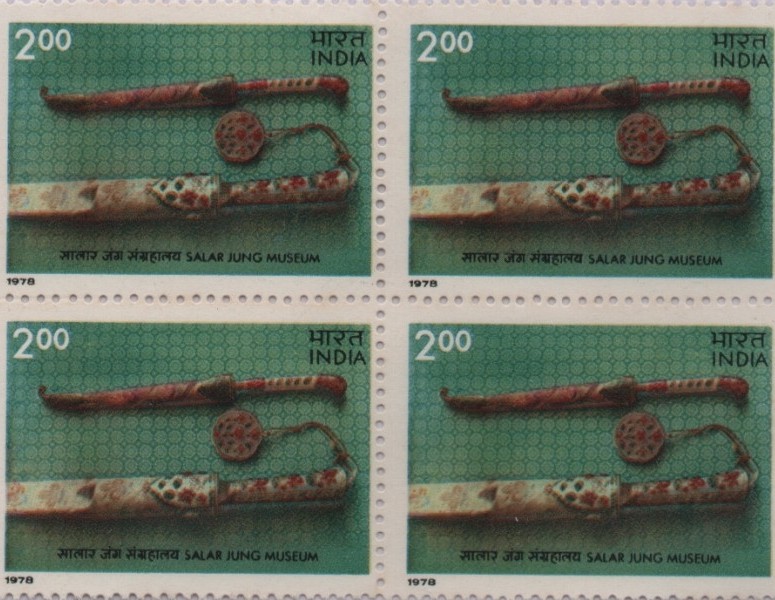
4. The 200 Paise (Customarily ₹2) Stamp: Dagger & Knife (Salar Jung Museum, Hyderabad)
- Description: This stamp highlights imperial Mughal artistry by depicting the ornate Dagger of Emperor Jehangir alongside the Knife of Empress Noorjehan.
- Historical Significance: These weapons serve as exceptional masterworks of historical metalwork, featuring stunning hilts heavily encrusted with jade and precious gemstones, reflecting the height of luxury and decorative arts during the Mughal era.
| Weight | 0.200 kg |
|---|---|
| Dimensions | 8 × 6 × 1 cm |